Culture Fit vs Culture Add: Why Hiring for Growth Matters
Estimated Reading Time 3 min read
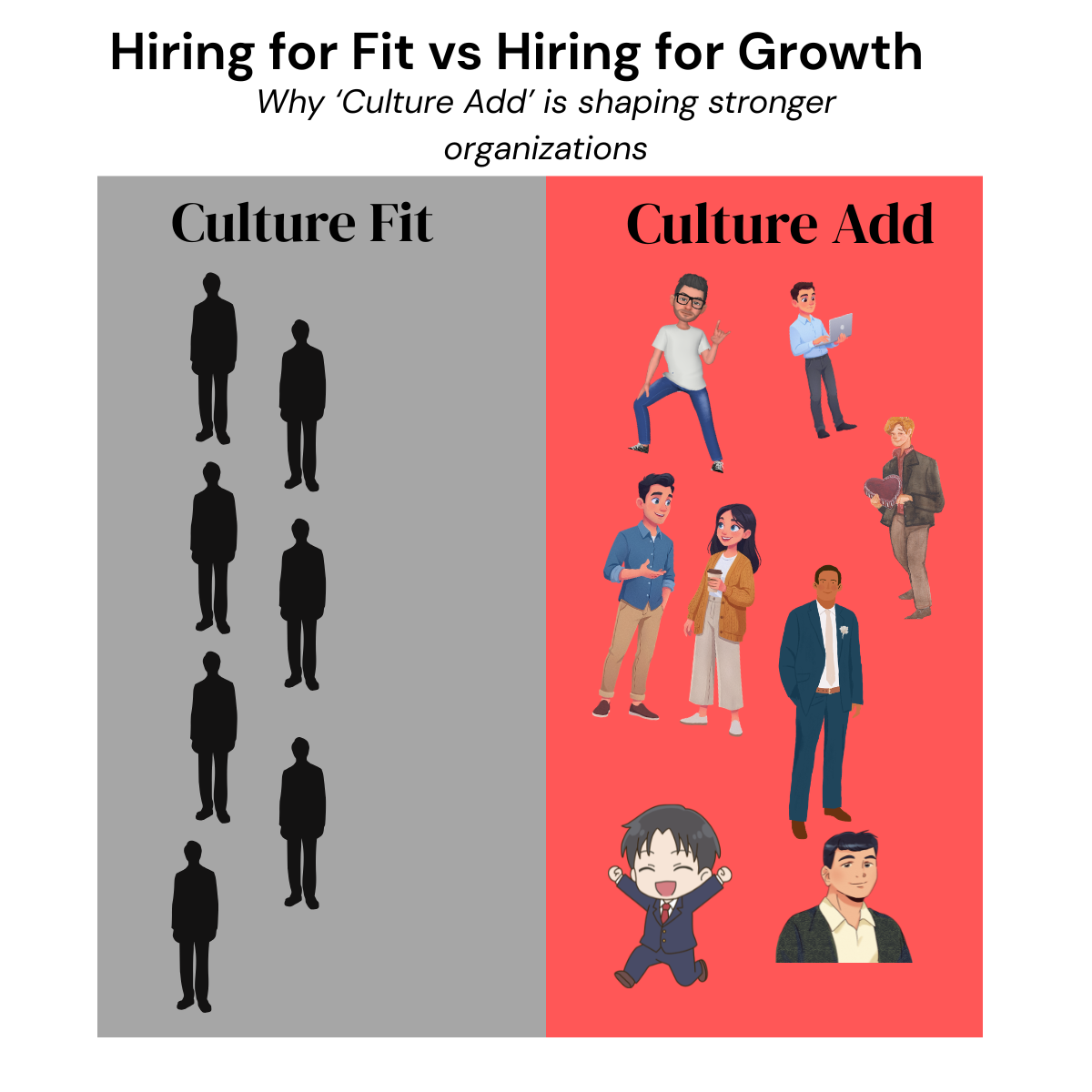
When companies hire, they often focus on culture fit. Culture fit ensures new employees align with existing values and workflows. It minimizes friction and creates stability. However, focusing solely on fit can limit growth. That’s why more organizations are shifting to culture add—hiring people who bring new perspectives and skills that strengthen the team.
What is Culture Fit?
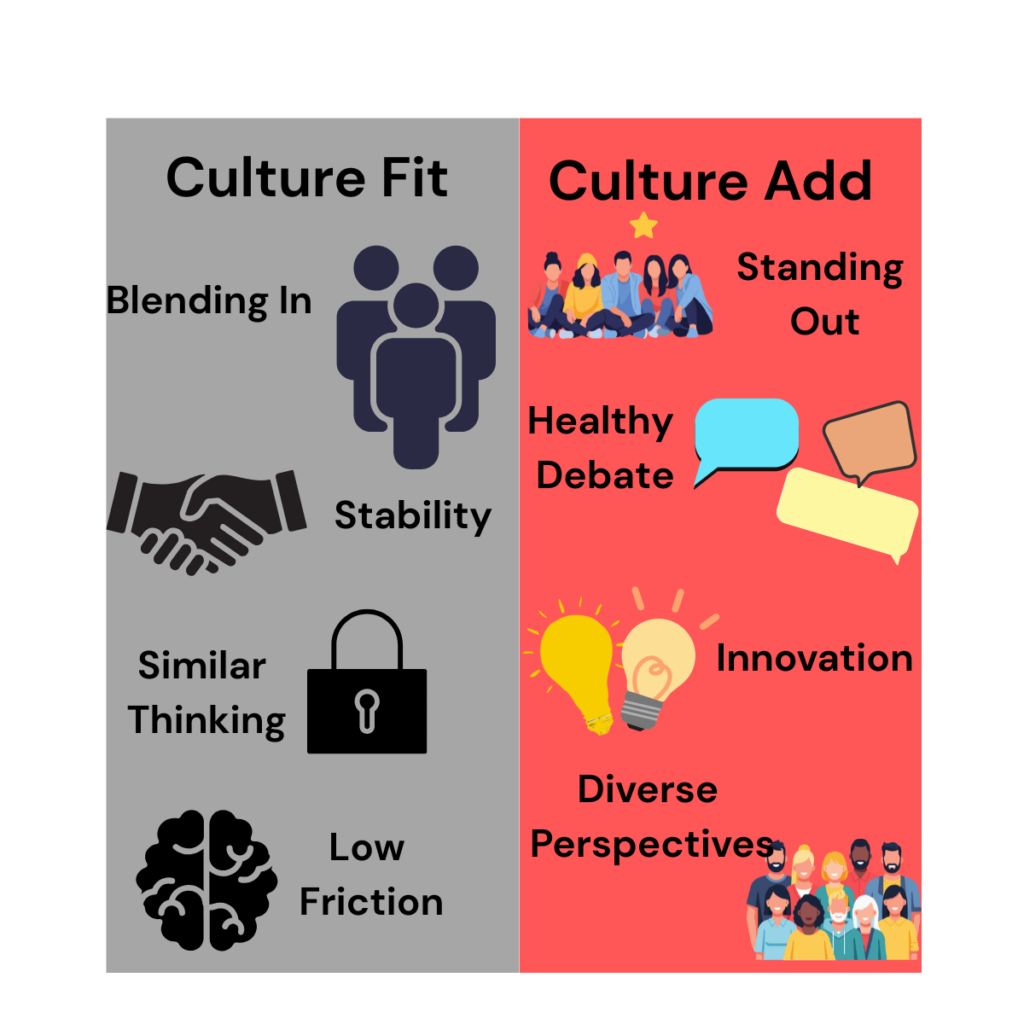
Culture fit refers to hiring someone whose behavior, values, and work style match the existing team. On the surface, it seems ideal: low friction, predictable collaboration, and consistent decision-making. For example, a team of similar thinkers may work efficiently because they already understand each other. Yet, this approach often leads to homogeneity. Teams may struggle to innovate, as everyone tends to approach problems in the same way.
Why Culture Add is Different ?
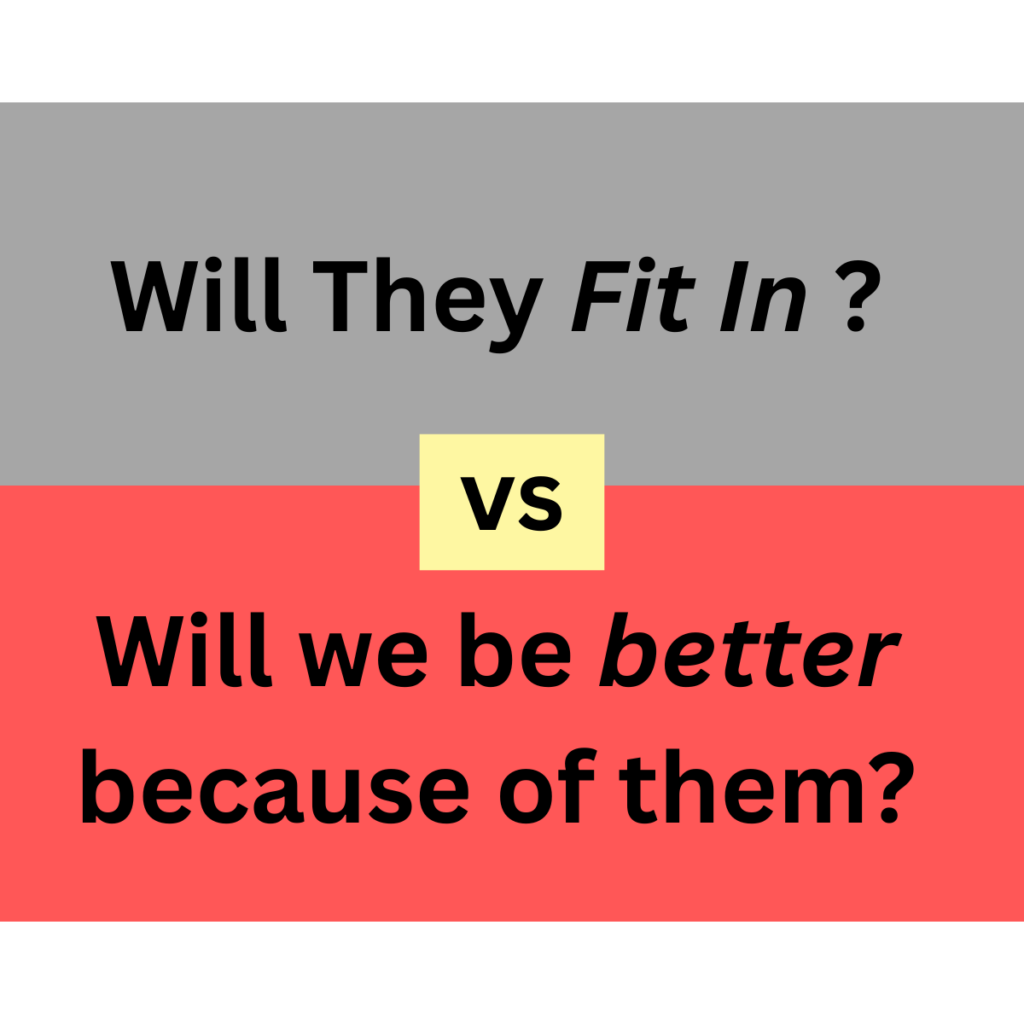
Culture add focuses on the value a candidate brings beyond fitting in. Instead of asking, “Will they blend in?” leaders ask, “Will we be better because of them?” Hiring for culture add encourages diverse thinking, new ideas, and healthy debate. It doesn’t mean ignoring company values—it means complementing them with fresh perspectives.
Business Impact of Culture Add
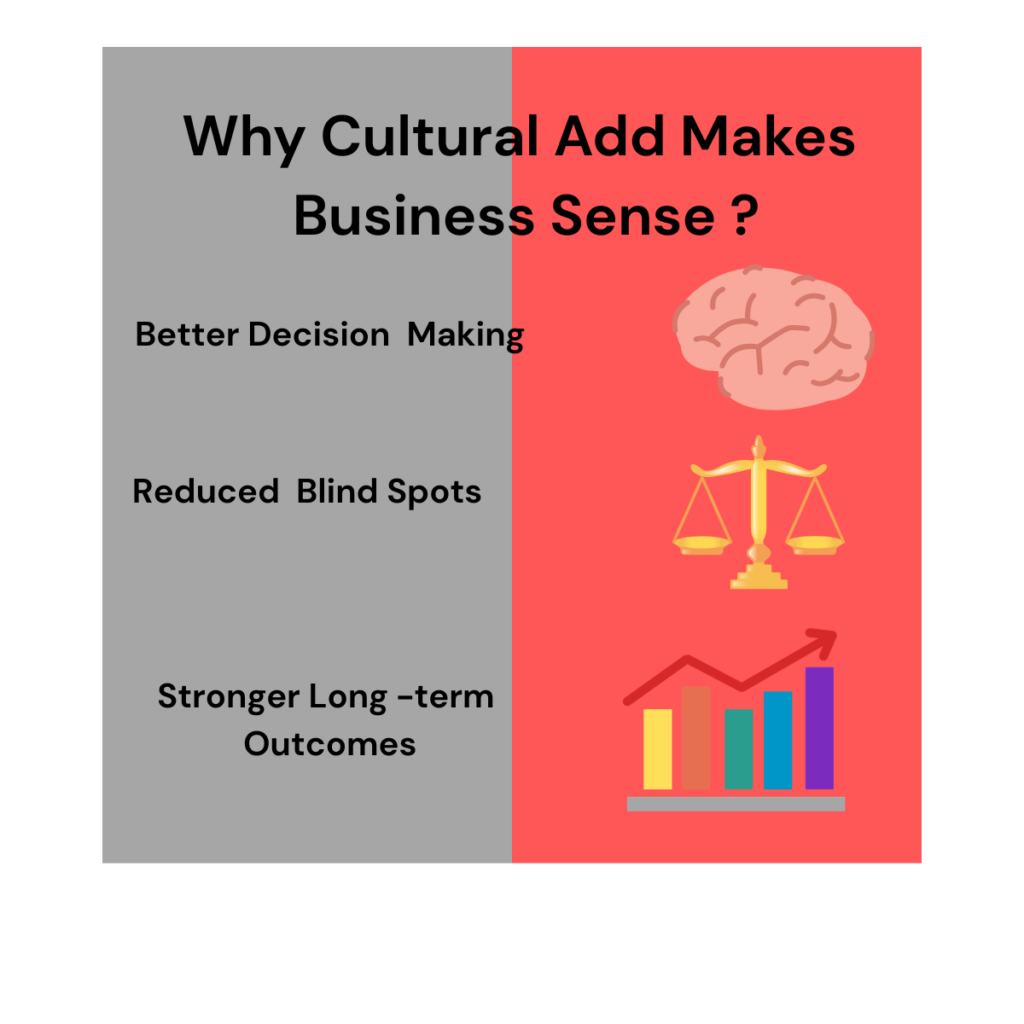
From a business standpoint, culture add can improve outcomes across departments. In finance, diverse perspectives strengthen decision-making and reduce blind spots. Teams with varied thinking are more likely to question assumptions, identify risks, and find new opportunities. In business development, employees who bring different insights can connect with a wider range of clients, discover untapped markets, and build innovative solutions.
How to Implement Culture Add
To implement culture add effectively, organizations should:
- Define core values clearly – Alignment matters, but only at the foundational level.
- Assess for perspective, not just fit – Look for unique experiences, skills, and approaches.
- Create inclusive onboarding – Encourage new hires to share ideas and challenge norms constructively.
- Measure impact – Track collaboration, innovation, and business outcomes to evaluate success.
The Right Balance
It’s important to strike a balance. Hiring purely for fit creates comfort but limits growth, while hiring purely for add may increase friction. Great leaders ensure alignment on values while seeking people who push the team forward. The goal is not uniformity but resilience and adaptability.
Conclusion
Culture fit maintains stability; culture add drives evolution. Companies that embrace this shift are better equipped to innovate, solve complex problems, and thrive in competitive markets. By asking, “Will we be better because of them?” organizations create teams that are stronger, more dynamic, and future-ready.
&&&&&&&&&&&&&&&&&&&&&&&&&&&&&&&&&&&&&&&&&&&&&&&&&&&&&&&&&&