

Why “Overqualified” Is the Most Expensive Hiring Mistake Companies Keep Making
Estimated Reading Time 4 min read
Overqualified candidates are, without question, some of the most undervalued people in any hiring pipeline. Working in staffing, I keep watching the same scene play out — a brilliant professional walks into an interview, performs flawlessly, and then gets quietly removed from consideration with two words that sound polite but sting like rejection: “She’s overqualified.”
It is, however, rarely about the candidate’s capability at all. Most of the time, it is about the hiring room’s confidence — or the lack of it.
The Hidden Translation Nobody Talks About
Furthermore, when organisations use the word “overqualified,” they are rarely making a measured talent decision. They are, in fact, making a fear decision.
The unspoken translation usually sounds something like this:
- She will get bored and leave.
- She will outshine the manager.
- She will want more than we are prepared to offer.
These are, of course, legitimate concerns on the surface. Nevertheless, they are almost never backed by evidence specific to that candidate. They are assumptions — and expensive ones at that.

What the Data Actually Shows
Consequently, the risk calculation behind rejecting overqualified candidates simply does not hold up under scrutiny.
Research from LinkedIn Talent Solutions indicates that 70% of experienced professionals would consider a role below their experience level — provided the culture, growth opportunities, and quality of management met their expectations. In other words, the majority of talented people are not holding out for a grander title. They are holding out for a place that genuinely values them.
Additionally, SHRM research puts the average cost of replacing a departing employee at between 50% and 200% of their annual salary. For a mid-level professional, that figure can easily reach tens of thousands.
The maths, therefore, does not support the decision. Rejecting a brilliant candidate to avoid a hypothetical departure ends up costing far more than the perceived risk of hiring them.
The Silent Star Problem
Moreover, the damage does not always begin at the rejection stage. Sometimes, overqualified candidates do make it through — only to find themselves unrecognised, unchallenged, and quietly invisible within the team.
These individuals — often the highest performers in the room — do not typically escalate their frustration. They do not file complaints or request urgent meetings. Instead, they process the absence of recognition internally. And when they have made their decision, they leave without warning.
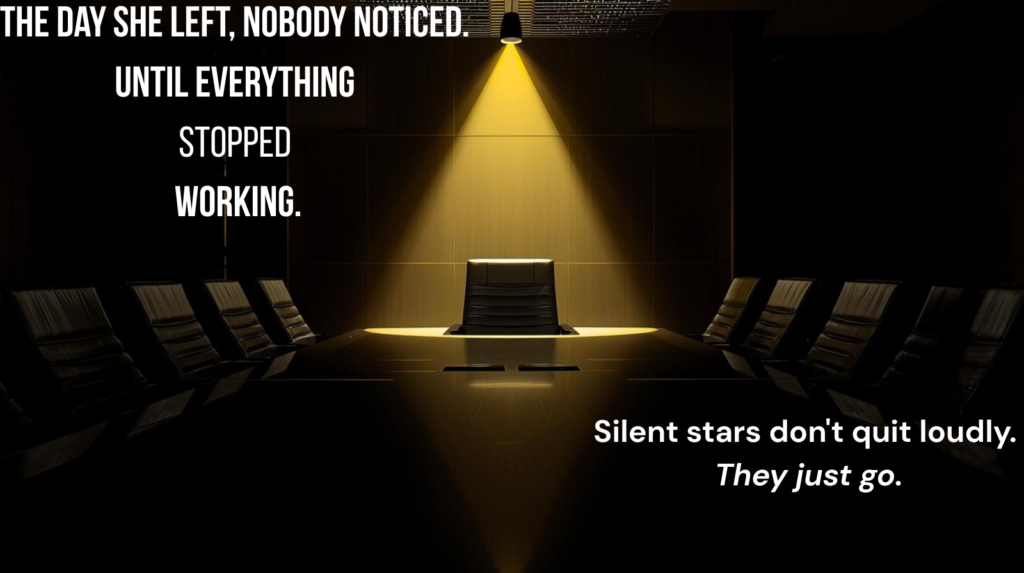
The gap they leave behind is, consequently, always larger than the organisation anticipated. The institutional knowledge, the client relationships, the quiet team morale they were maintaining — all of it walks out with them.
The Door That Was Never Opened
Similarly, the talent that is rejected at the interview stage takes something with it too — potential that the organisation will never see return.
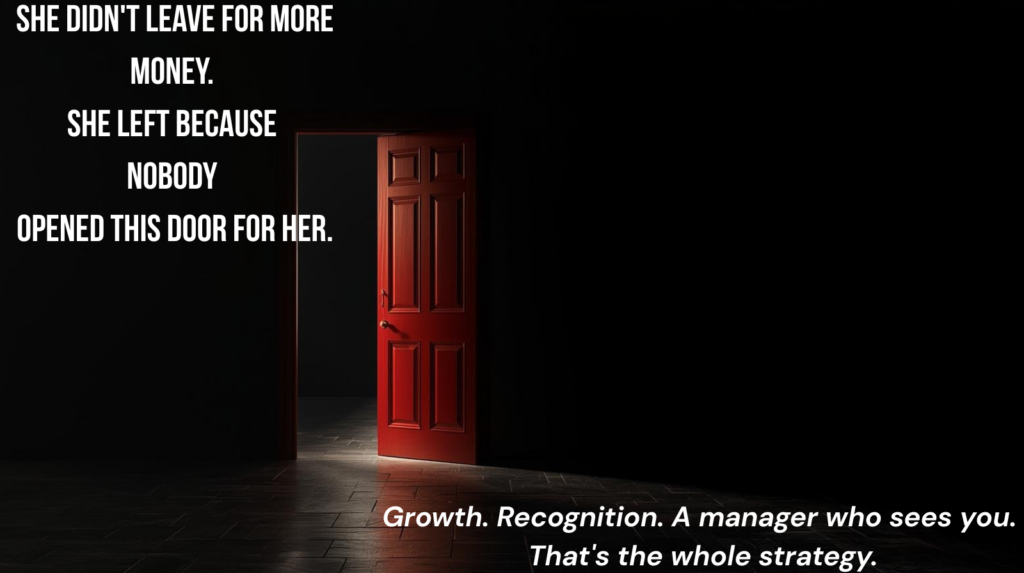
[INSERT IMAGE HERE — Image 3: Red door / She didn’t leave for more money] Suggested caption: Growth. Recognition. A manager who sees you. That’s the whole strategy.
Growth, recognition, and a manager who genuinely sees their team — these are not particularly complicated retention tools. They are, however, the ones most consistently neglected in favour of salary benchmarking and perks packages that nobody asked for.
What Smart Organisations Do Differently
The companies that consistently attract and retain exceptional people have, notably, reframed the question entirely. Rather than asking “will this candidate get bored?”, they ask “are we interesting enough to keep them engaged?”
Rather than worrying whether a brilliant hire will outshine their manager, they invest in managers confident enough to champion people who challenge them.

The pattern, ultimately, is straightforward. Organisations that hire for comfort stay comfortable. Those that hire for capability grow.
The Takeaway
Overqualified is not a verdict on the candidate. It is, rather, a mirror held up to the organisation — reflecting whether the culture, the management, and the growth environment are genuinely worth someone’s potential.
The next time someone in a hiring room reaches for that word, it is worth pausing to ask one question first:
Are we turning away brilliant — or are we protecting ourselves from it?
Working in staffing and seeing patterns in how talent moves? I’d love to hear your experience in the comments below.
$$$$$$$$$$$$$$$$$$$$$$$$$$$$$$$$$$$$$$$$$$$$$$$$$$$$$$$$$$$$$$$$$$$$$$$$$$$$$$$$$$$$$$