
Employee Retention vs. Engagement What’s the Difference?
Estimated Reading Time 4 min read
Employee Retention vs. Employee Engagement: Are You Confusing the Two?
Many business leaders confuse employee retention and engagement — and that confusion is expensive. Retention tells you whether people are staying. Engagement tells you why. These are not the same thing, and treating them as interchangeable is one of the most common — and costly — mistakes in workforce strategy today. If you want a high-performing team in 2026 and beyond, you need to understand both, measure both, and act on both.
What Is Employee Retention?
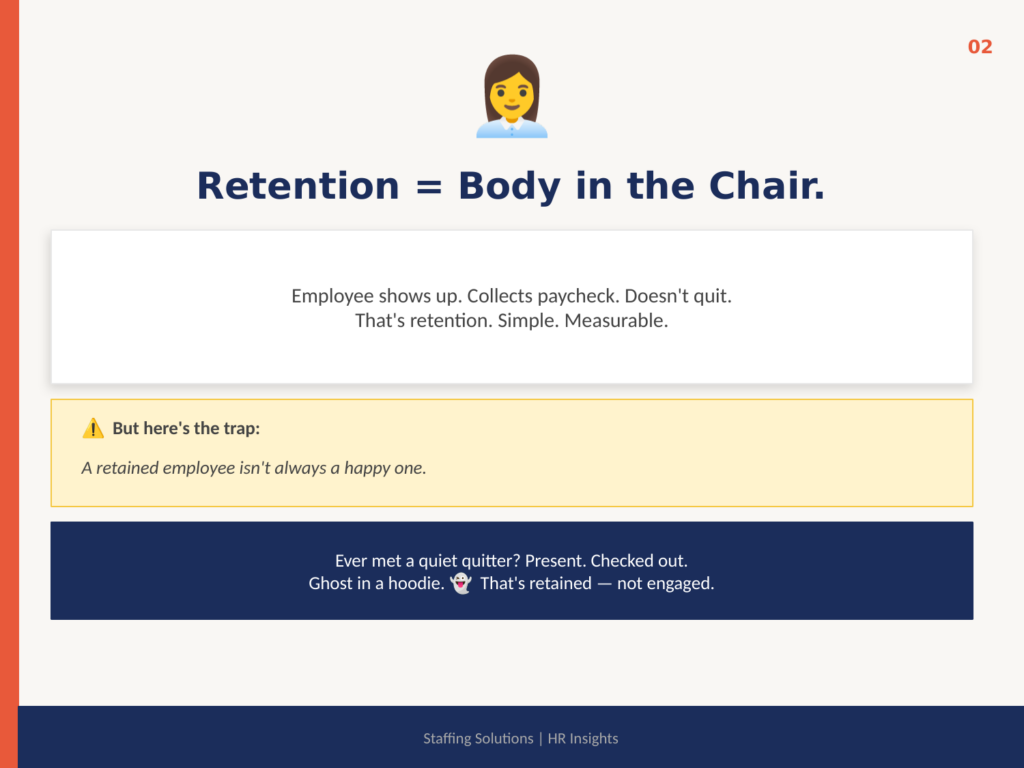
Employee retention measures whether your people are still on the payroll. An employee shows up, collects their paycheck, and does not quit. That is retention. It is simple and measurable. However, here is the trap — a retained employee is not always a happy one.
Have you ever encountered a “quiet quitter”? They are present, but completely checked out. Retention without engagement is just expensive headcount. You are paying for a body in a chair, not a brain in the game.
What Is Employee Engagement?
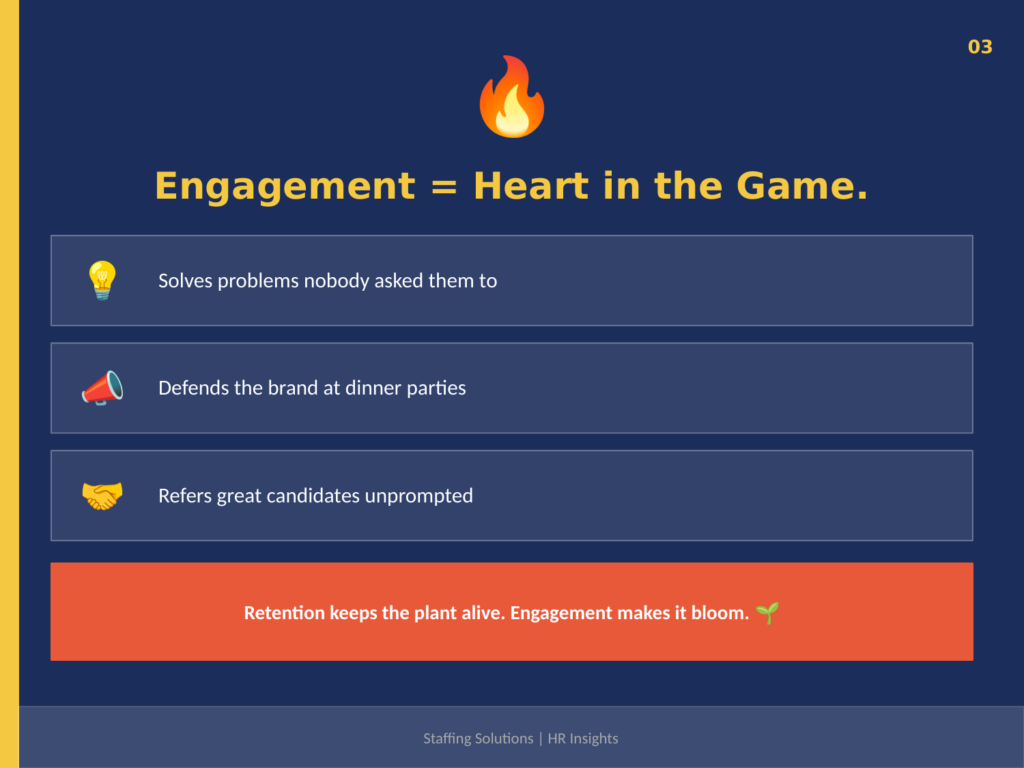
Engaged employees do not just show up — they show up fully. Employees that solve problems nobody asked them to. At Dinner Parties, they will defend your brand. Candidates referred by them are generally from the top creamy layer. They genuinely care about the work.
As a result, engagement is the secret sauce. Retention is just the jar. You need the jar, but without what is inside it, you have nothing of value.
Think of it this way: retention is keeping the plant alive. Engagement is making it bloom. Both matter. But one helps your business survive, while the other helps it thrive.
Why the Difference Between Retention and Engagement Matters More Than Ever in 2026–2027
The workforce is shifting fast, and the gap between retained and engaged employees is widening. Here is what the data tells us:
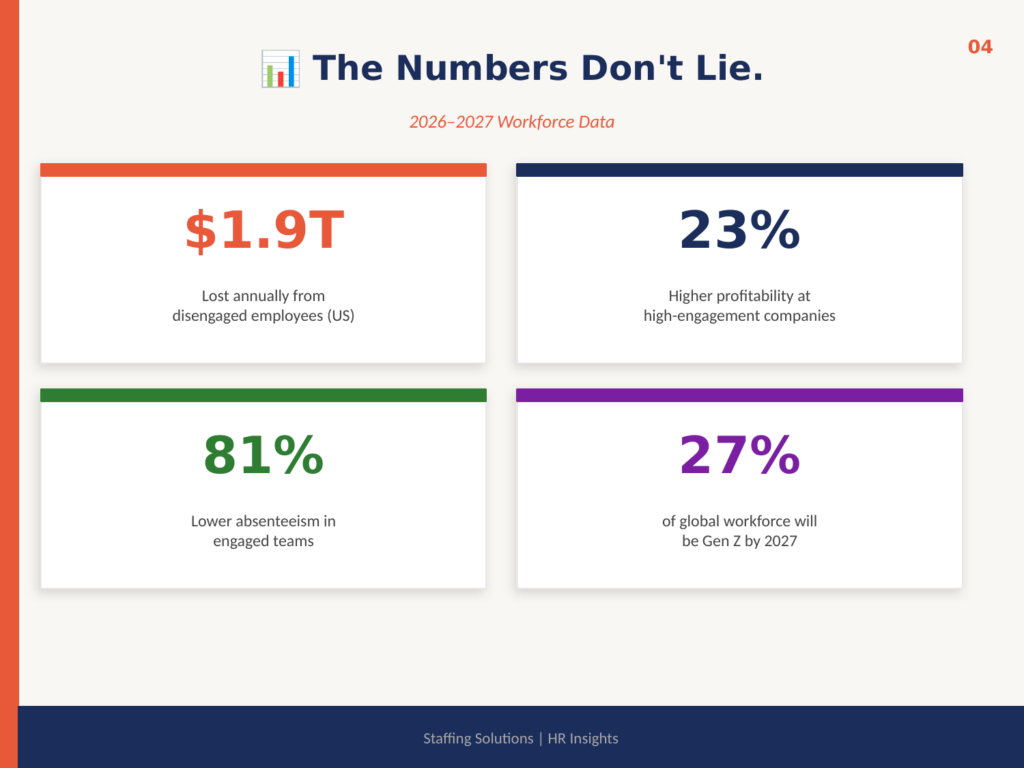
- By 2027, Gen Z will make up 27% of the global workforce. They do not just want a paycheck — they want purpose, growth, and flexibility. Retain them without engaging them, and they will leave anyway. Just slower.
- Disengaged employees cost US businesses $1.9 trillion in lost productivity annually. That is not a typo.
- Companies with high engagement report 23% higher profitability.
- Engaged teams show 81% lower absenteeism.
- By 2026, 65% of HR leaders rank engagement as their top retention lever.
Confusing retention with engagement is like confusing your GPS with your fuel tank. Both matter for the journey. They just do very different jobs.
What Strong Employee Retention and Engagement Look Like in Practice
A mid-size logistics client we worked with last year is a perfect example. On paper, their retention looked solid — low turnover numbers across the board. However, their engagement surveys were red flags everywhere. Six months later, they experienced mass exits.
We stepped in and helped them restructure onboarding and build internal mobility pathways. The result? Turnover dropped 28% in two quarters. Engagement scores rose by 40%. That is the power of catching the difference early.
The smartest organisations are not waiting for exits. They are proactively building engagement strategies now — flexible work models, career pathing, manager training, and meaningful recognition programmes.
Your 2027 Workforce Strategy: Retention vs. Engagement
Here is how to think about your strategy going forward:
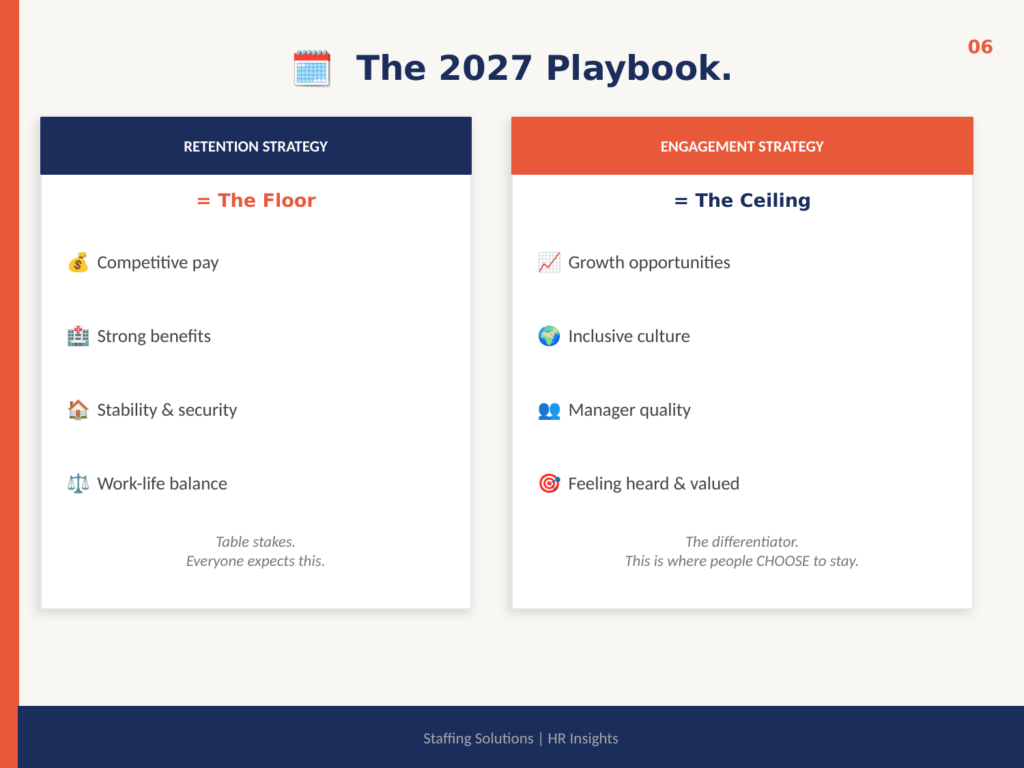
Retention strategy = competitive pay, stability, and benefits. These are table stakes. Every employer needs them.
Engagement strategy = growth opportunities, inclusive culture, manager quality, and feeling genuinely heard. This is the differentiator.
You need both. However, do not confuse them. One keeps people. The other makes them want to stay.
A Quick Gut Check for Your Team
Are your employees staying because they want to — or because they have not updated their CV yet?
Employee retention is the floor. Employee engagement is the ceiling. A strong workforce strategy builds both — deliberately, consistently, and with data behind every decision.
[Want to learn how to audit your engagement strategy? Read our guide to building an engaged workforce or get in touch with our team to start the conversation.]
Frequently Asked Questions
What is the difference between employee retention and engagement? Employee retention measures whether staff remain at your organisation. Employee engagement measures how motivated, committed, and emotionally invested they are in their work. High retention does not automatically mean high engagement.
Why does employee engagement affect retention? Engaged employees are significantly less likely to leave. When people feel purposeful, heard, and supported, they choose to stay — not because they have to, but because they want to.
What are the biggest drivers of employee engagement in 2026? The top drivers include career growth opportunities, quality management, flexible working arrangements, inclusive workplace culture, and recognition programmes.
#EmployeeRetention #EmployeeEngagement #HRStrategy #WorkplaceStrategy #FutureOfWork #StaffingSolutions