
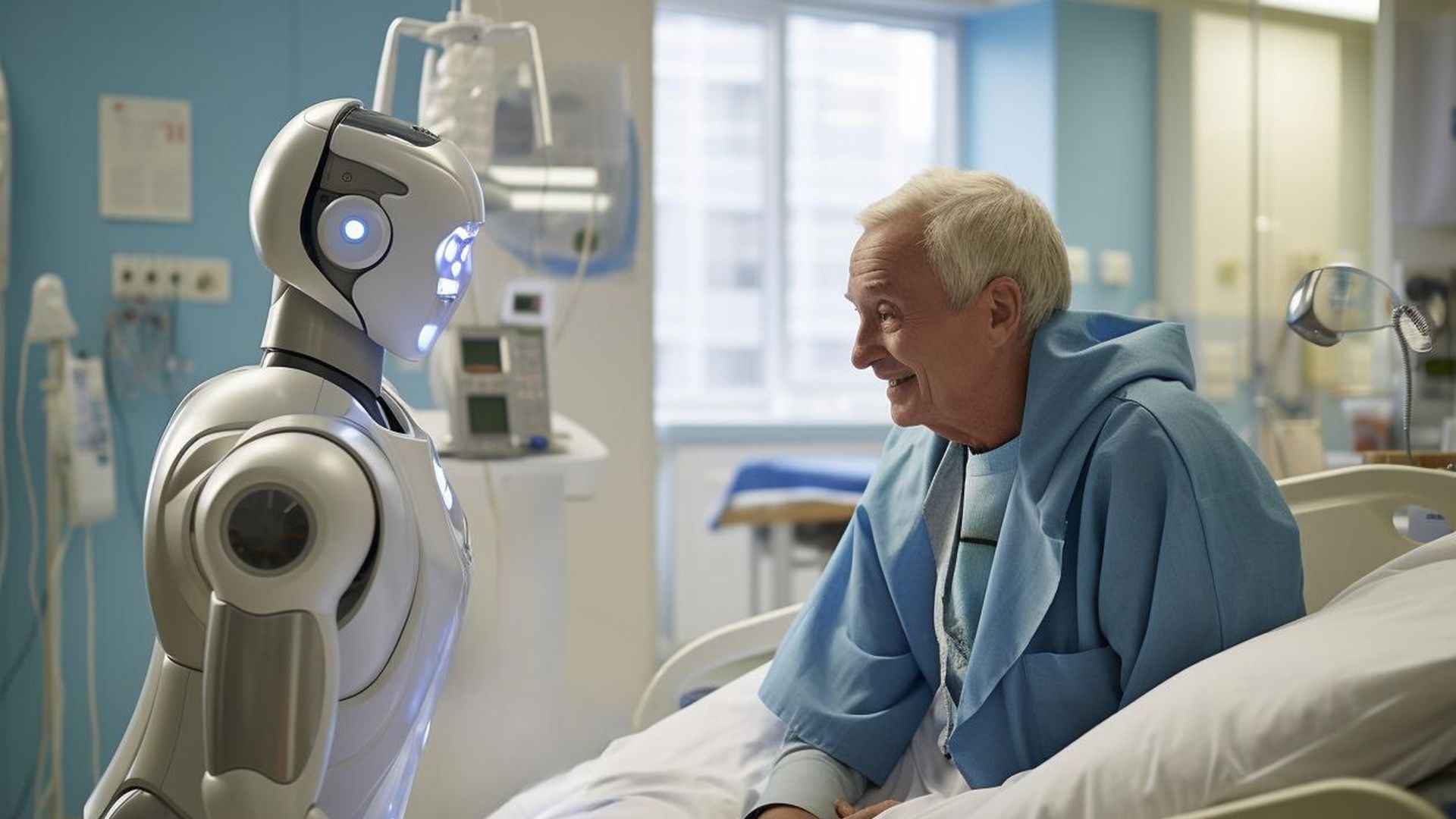
AI in Healthcare Staffing
Estimated Reading Time 3 min read
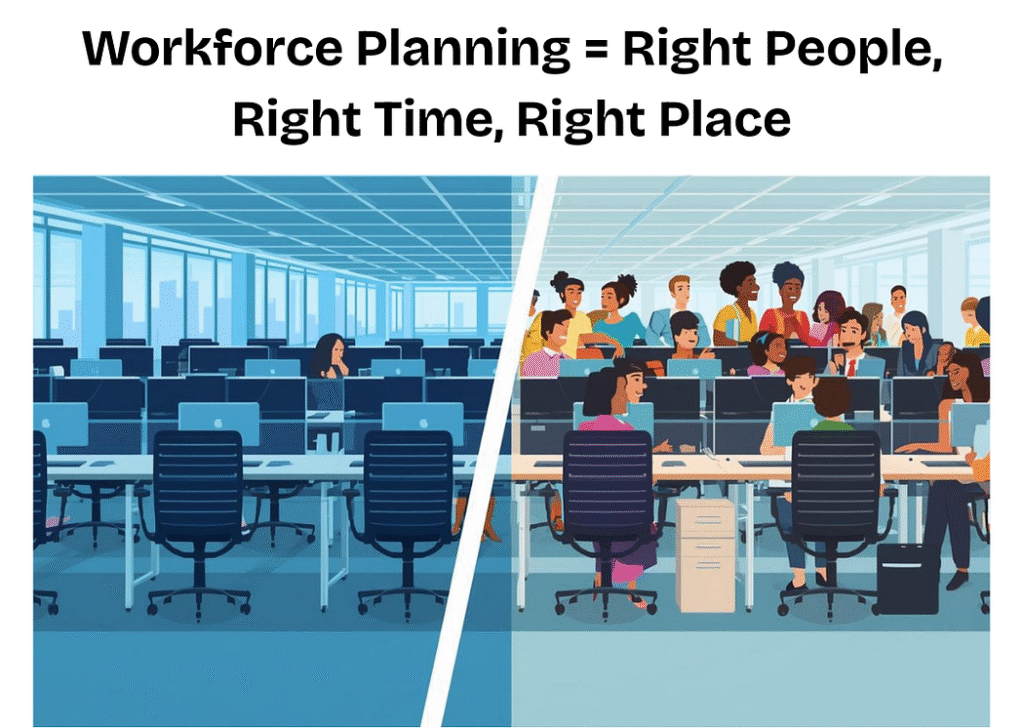
Planning for People, Not Just Numbers
🩺Healthcare staffing👩⚕️is being transformed by AI in Healthcare Staffing Solutions and often feels like running a 24/7 restaurant with customers who don’t book tables in advance.
Patients walk in when they please, 🤒flu season crashes the party, and 👩⚕️nurses are expected to serve compassion with a side of stamina. No wonder workforce planning gives hospital administrators a few extra grey🩶 hairs.
But here’s the good news: AI is stepping in like the calm sous-chef who knows exactly how many onions you’ll need before the rush hour begins.
Why Workforce Planning Matters (NOW More Than Ever) : Let’s be real.
📊The U.S. is staring at a shortage of nearly 200,000 nurses by 2031 (U.S. Bureau of Labor Statistics)📊. Hospitals are struggling to balance patient demand with exhausted staff.
It’s not just about filling shifts — it’s about keeping people from burning out and walking away.
AI is helping in two big ways:
1. 🕵️♀️Forecasting demand: Predicting patient inflow during flu season, or even spotting staffing needs for specific departments.
2. 📅Smarter scheduling: Matching nurse skill sets with patient needs, while still giving someone that rare Saturday off for their kid’s soccer game.
Mount Sinai, for example, uses predictive analytics to plan ahead for peak ER visits. And some staffing agencies report that AI has cut time-to-hire by nearly 30%. That’s the difference between “we’ll call you next month” and “can you start Monday? 📅
A Humanised Twist
Of course, algorithms don’t understand human fatigue. A nurse isn’t just a “resource” — she’s someone who still has to make it home to feed her cat, water her plants, or binge-watch Grey’s Anatomy.
Here’s a poem for them :
Numbers may guide the shifts we see,
But hearts still power the industry.
AI can count the beds and charts,
Yet care begins with human hearts.
The Road Ahead
Imagine a hospital where administrators aren’t panicking at the last minute, nurses get schedules that actually respect their lives, and patients are greeted by caregivers who aren’t running on caffeine fumes alone.
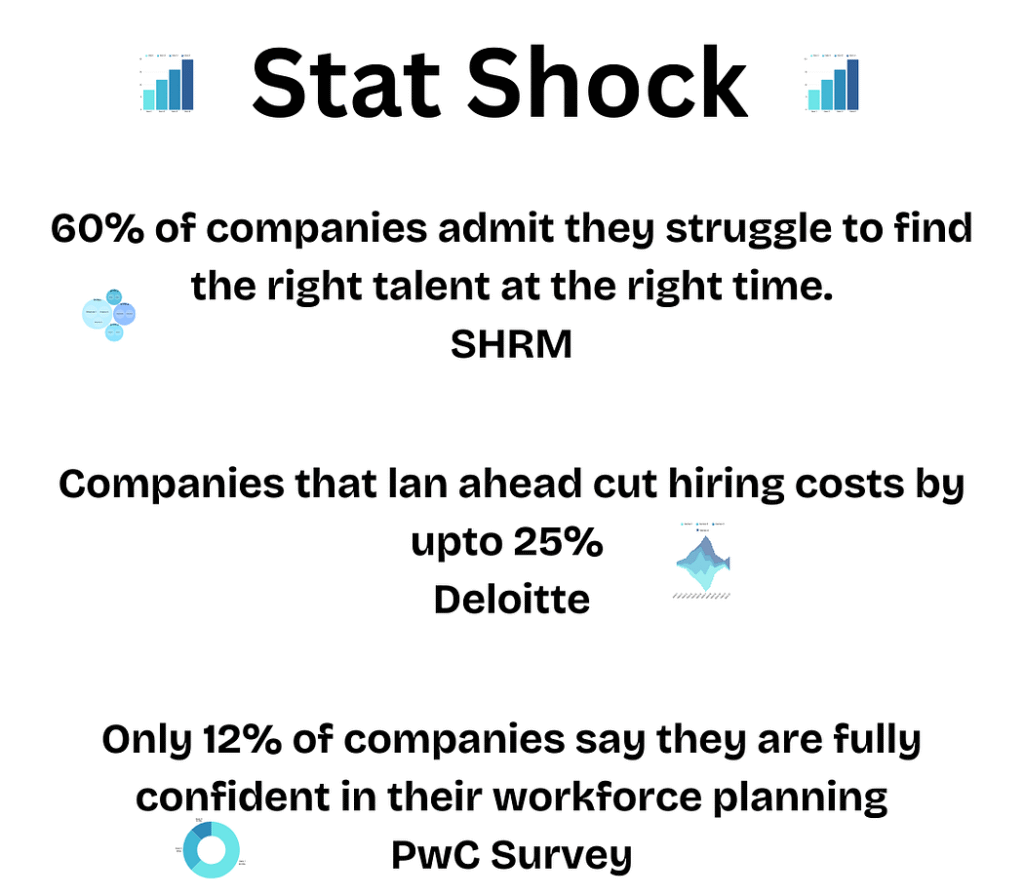
📊And here’s another reality check: A recent Mercer Global Talent Trends survey found that 82% of executives say workforce planning is now a top priority, yet less than half actually have a plan beyond the next 12 months.
In healthcare, the gap is even wider — 📈by 2030, the WHO predicts a shortage of 10 million healthcare workers worldwide.
Meanwhile, in retail and hospitality, 💹turnover hovers around 70% annually in frontline roles.
Translation? If workforce planning were an exam, most companies would still be cramming the night before!
That’s not fantasy. That’s the promise of AI-driven workforce planning — not replacing humans, but helping humans show up at their best.
Staffing done right is more than a plan,
It’s caring for patients and caring for Man.
With AI as helper, the load feels light,
Healthcare’s future looks a little more bright.

Final Thought: AI may be the math genius in the room, but the soul of healthcare is still human.
Workforce planning with AI is about balance — making sure the right nurse is in the right place at the right time, without losing sight of the fact that people aren’t just shift numbers, they’re the heart of care.